Childhood Writing4AM Runs

I wrote this back in early high school, but am posting it now; thought it was neat.
There is something magical about running; after a certain distance, it transcends the body. Then a bit further, it transcends the mind. A bit further yet, and what you have before you, laid bare, is the soul.
— Kristin Armstrong
Most people think running sucks. They argue it’s just a sweaty, tiring, grueling endeavour. To be honest, I agree. Running, in and of itself, hurts. It’s miserable. Don’t try to tell me otherwise. So why do I still do it? Because running isn’t just about running.
Surprisingly, I didn’t have too difficult of a time convincing other people of this ideology. I’d open a conversation with people, all-too-ready to shower them with reasons why running is horrible only to have them agree. The conversations usually went something like this:
“Hey guys,” I’d start, yearning for the triviality that any opposition to my proposition could bring.
“Yeah?” They’d reply quickly.
“Running sucks,” I’d declare, staring at them far too intensely, as if daring them to oppose me.
“Yeah. We know,” they’d always utter in perfect unison, affirming the fact I’d wanted to oh-so-dearly argue with them.
I often wondered if the people I asked were runners themselves. Then again, would that change the type of response they’d give? Somehow I doubted it.
Running is a funny thing. It’s something that’s mysteriously evolved from being a critical part of our survival, to a recreational past-time chasing nothing more than a dopamine high.
It was first invented (if you can call it that) in 1748 by Thomas Running. He discovered it when he tried to “walk twice at the same time” [source]. Since then, the activity has become exponentially more popular. In 776 B.C.E, it was first introduced as a sport in the town of Olympia, Greece. However, at that time, there weren’t any long-distance type races. That changed in 490 B.C.E with Pheiddepedes. You’ve probably heard about him — the man that single handedly created the marathon. To summarize his story, he ran a grueling twenty six-mile distance in order to deliver the news of Persia’s defeat to Athens. Then promptly died. Because of him, I’m a long-distance runner.

Thanks Pheiddepedes.
I ran my first race almost a decade ago. I was seven, and more than a little pessimistic about what I was about to do. There were 250 boys — 249 different chances to be defeated. Lined up at the start, I recall looking left and right, observing so many faces, so many different kids hungry to win. Yet I knew only one could prevail. Somehow, that felt surreal.
I remember watching the starter stroll past all of us, casually cradling the starting gun on the way to his perch. Before the race, he gave us a little pep talk, but nobody listened.
When he raised his gun, the world stopped. It was as if somebody had died. The field stood tense in quiet anticipation, mourning the loss of their freedom; for the next ten minutes, they would be slaves to their coaches, legs, and ego. Then, BANG, the moment shattered.
We rocketed forward, a tsunami of bodies, devastating the terrain beneath us. Within those 15 starting seconds, I remember seeing so much emotion. I saw the fear of the confident, the surprise of the underdog, and the anger of those who had fallen behind. Fortunately, I was unable to observe my own overwhelmed expression.
Then something weird happened. My competition started to tire. They’d exhale a huff of embarrassment and shorten their stride, slipping back into a pace comfortable for them. This kept happening. Eventually, a leading pack began to form. Surprisingly, I was in it. At that point, I accredit my speed to fear. I was just a terrified gazelle breaking free from the coalition of hungry cheetahs behind me.
My good friend finished first that day, I finished 249th from last, and my other friend finished third. I remember being disappointed. However, my parents weren’t. I recall my father bounding up to me, his face wearing a shocked expression, “I guess you’re a runner” he said with a smirk. So, like he told me, I became a runner.
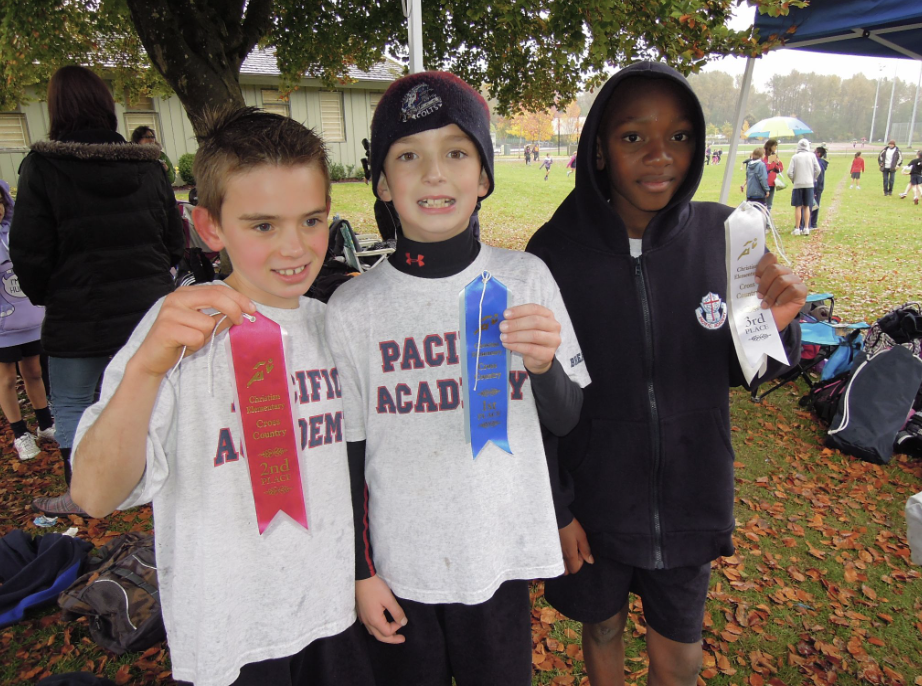
Only after the intoxicating taste of the podium had worn off did I realize something. I hadn’t actually enjoyed the run itself. I mean, sure, the start had made me feel powerful, and the finish had made me feel glorious, but the bit in the middle? It hurt. Few spectators watch the middle of a distance race. It’s the boring part, the monotonous doldrums of the whole ordeal. In the middle of the race, the thought of it finishing is the only thing that keeps a racer’s soul from capsizing.
The next year I spent trying to win the subsequent annual Bear Creek cross country race. I sacrificed my free time, joy, and energy to better myself. One second faster for a week’s worth of pain training. I often questioned whether it was a worthy trade. My coaches always seemed convinced it was.
For months on end, I’d pry myself from the comfort of my bed at 6AM to run in the morning twilight. Often fueled by just a coffee, I was nothing but a glazed zombie following a mindless routine. Wake. Run. School. Homework. Sleep. Repeat. Understandably, I got sick of it. Yet, I kept running.
Motivation is one of the easiest things for a runner to lack. After all, most people believe running is just a fast way to burn calories — not an activity they should actually find fun. In fact, a survey done by Strava determined that only half of those who run actually enjoy it [source]. Such a surprising statistic becomes unsurprising when you account for the growing number of people who are running simply to better themselves. These people don't enjoy the constant energy and willpower it takes to drive one foot in front of the other — however, they tolerate it to lose weight, look better, become fitter, stronger, and overall a better version of themselves [source].


I personally believe that people lack the motivation to run because they’re doing it wrong. If any runners are reading this, before you throw my paper in the shredder, bleach the crinkle paper, and then burn the shredder, you must understand that this is my opinion. Sure, I agree that in the short term having a tangible goal is extremely beneficial, but in the long term not loving what you’re doing will inevitably lead to burnout. As one athlete puts it, runners who attach “existential meaning” to their running are much more likely to make it a lifelong, enjoyable habit [source].

Eventually, after hundreds-of-hours of running later, I came back to that very first race, ready to win. I remember telling myself on the car ride to the race that anything less than first was last. I believe that mindset was a result of the pressure I placed upon myself.
Failure was simply unacceptable.
Thankfully, that day I crossed the finish line first. So, reasonably, I crossed the line ecstatic, but I was only able to bask in my triumph for a few seconds before a black wave of sadness hit me full force. I had won the race, but at what cost? I had sacrificed so many hours of sleep, joy, and freedom for this. Was it worth it? The thought plagued me all the way home.
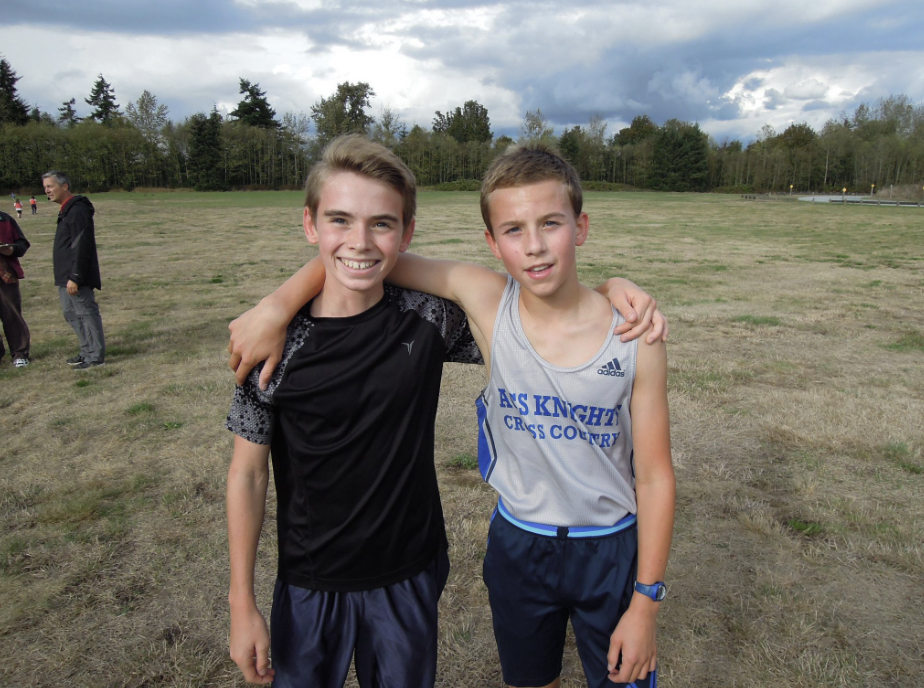
After a couple more running seasons had come and gone, I got asked to join my school’s cross-country team. I had ambivalent feelings about that. I was fearful of the road that lay ahead, yet excited for the few fruits such a tiresome path could bear. I started training even harder than before. Before school. After school. During school. I was a mess. An exhausted, worn out winner of a mess, as that year, I didn’t lose.

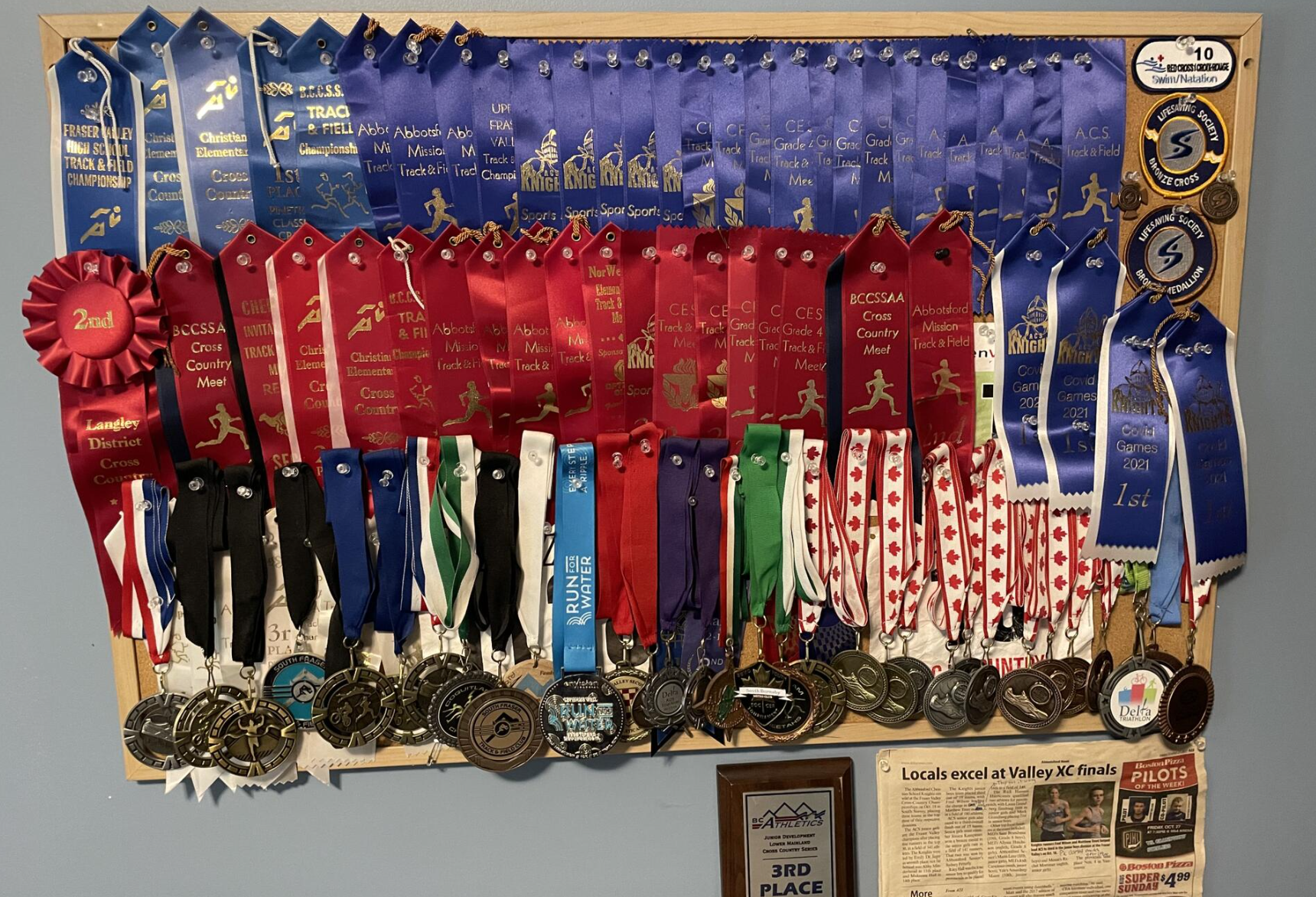
Yet, while my wall accumulated shimmering medals, my body, unbeknownst to me, was like a stick of dynamite.

Then came the day that lit my fuse.
It was a crisp October morning, and I was lined up stoically on the starting line of my umpteenth race that season. However, I was still scared. The rolling fields in which the five-kilometre race would take place looked ominous to me, like at any moment, they could open up and devour me.
When the race began, I charged forward, slicing through the wind with pessimistic optimism. As usual, I quickly flew to the front of the pack. I felt like a jet fighter draining my soul as fuel. Every step was brutal, yet every step carried me ever closer to the heaven that would be the finish. Hill after hill, I fought off rivals, pursuing me relentlessly for my position. They’d fly up from behind, looking to topple me, and we’d engage in a sort of twisted dance, both vying for a position that we each knew only one of us could own.
I always fought them away, but every time I sustained heavy damage.
By the time the final lap came around, my cockpit was shaded blood red, and my ears were in agony from the constant bombardment of claxons. It was bad. My ailerons were shredded, and I began to enter a death-defying spiral. I knew I wouldn’t last long, but I kept pushing. Two hundred metres before the finish, I couldn’t go any further. My engines sucked the last ounce of my soul, and I crashed. 1, 2, 3, 4, 5, watching my opponents soar past me hurt, 6, 7, 8, 9. I limped, crippled, across the finish line. I ended up placing in the double digits. It devastated me.
That race destroyed my hip, taking me out of the game for two years. To a runner, that’s like being blinded.
However, I wasn’t alone in my suffering. In almost every race I ran, one of the competitors finished with some sort of dream-destroying injury. Statistically it makes sense, as “8 out of every 10 runners” every year gets injured [source], but seeing it first-hand always saddened me. Such a stat truly demonstrated how dangerous my running really was.

What was the worst part about losing my freedom to run? I think it must’ve been having to tell my coaches. I felt oddly ashamed. I don’t know why, as it most definitely wasn’t my fault, yet having to look them in the eyes and tell them it was all over made me feel sick inside.
However, I didn’t quit. In fact, I did everything I could to keep on “running.” Thankfully, my coaches understood what I was going through and helped me keep fit through a variety of exercises. Occasionally, I even trained with them on a bike — the one activity my body still miraculously allowed me to do.
I often wonder why coaches don’t win medals. They are truly the unsung heroes behind every athlete. At higher levels, sometimes coaches mentored multiple athletes — even those who were in competition with themselves. For example, Marina Zoueva, during the Olympic figure skating event, coached both the Russian and American teams.
Simply, a good coach is precious. I appreciated mine.
That year, one difficult practice stood out to me. The team was training hills (ugh, hills) in the rain (ugh, rain), and I was told it would be easy enough to bike alongside everyone. Let me tell you, it was not.
The trail was wet, muddy, and most of all slippery — and I was on a bike with laughably deep treads. I suppose you know where this is going. I fell more times than I could count. I was so covered in mud by the end of the day that I must’ve looked like the Sasquatch’s long-lost brother. To top it off, I didn’t have a ride home. While the rest of the team packed into the warm minibus, I waved goodbye and cycled along the windy road home.
On the lonely ride, I was absorbed in my own thoughts. I found it impossible to drown out the cacophony of voices whispering in my ear, pleading with me to just stop running. All it did was hurt me; I was a helpless pawn, voluntarily taking bites from Snow White’s poisoned apple again and again and again.
But I didn’t stop. And during the ride, I finally figured out why. I kept running because I had a duty to run. My parents expected me to get an athletics scholarship. My coaches expected me to win every race. My friends expected me to be the fastest. And I only ever expected myself to live up to their standards. In the relentless rain, I peddled faster and faster, as if attempting to escape my harsh realization. Upon arriving home, I stumbled up to my bedroom, only to bury my muddy face in the abyss of my sheets. Why hadn’t I realized it before? I wasn’t and never had been a runner. I only ran because I was told to.
In that moment, my world exploded, my body turned to cosmic dust, and the motes of my being were propelled into the far corners of the universe. The silence of the cosmos penetrated my ears. I felt like screaming out in pain, but I knew nobody would hear. And then, as suddenly as it had happened, it unhappened. The fragments of my soul flew back together in collective harmony, and I gasped for air.
I wasn’t sure how to proceed after that day. I felt lied to, although I knew the dishonesty was all mine. I wondered whether there was a reason for it all. Why did other people run? So, like any good Gen Zer, I Googled it... "WHY DO PEOPLE RUN???".
Apparently, it helped “improve” one’s “mental health” [source]. I found irony in that. Additionally, it was supposed to “boost your mood” [source]. I somewhat agreed, it could. Then came something profound: Running is “blissful, meditative,” and helps provide one with a “sense of freedom” [source]. The last three words stuck in my head. They were simultaneously the most rancid lie and purest truth. In my reality, they imprisoned me. I felt like Tantalus, eternally doomed never to have what I most desired: freedom. How could I find joy in something I never truly knew? Was that question frivolous?


The more I thought, the more I realized what I had to do: either define running on my own terms or quit it altogether. However, indecision was a menace. So I waited. I could not afford to make such a decision rashly.
Eventually, months went by without running, and my question became increasingly urgent. My schoolwork was piling up, and I was overwhelmed by the weight of the world. I felt like Atlas had handed me his burden. My tests and assignments were impassable roadblocks, time-sucks that would no doubt one day best me. I’d work into the early morning hours, eyes heavy, struggling to keep my unbridled mind focused on the task at hand.
Then one night, I’d had enough. After sitting in my chair for hours too many to count, I needed to move. I needed to taste the nipping cold of the early morning wind.
I needed to run.
It was 4AM. Not an ideal time to run, but in my eyes, it was do or die. As I reached through the cobwebs for my dusty runners, caked with dried dirt from my last runs eons ago, I felt calm. There was no starter, no gun, no competition, no spectators, no coaches, no parents — no pressure. It was just me and the moon.
I decided to run trails. The dark, black, spooky, peaceful trails — for there, nobody could see me run. The darkness was my shield, the trees impartial observers, and the moon my glowing guide. I felt unshackled, untethered, and unrestrained.
Just Run
Racing thoughts, still legs
As the clock is ticking I sit in a daze
Plentiful days; plentiful nights
I wonder what to do, I have no rights
I’m captive to my work, my life, my goals
I yearn to be free, but have no control
My runners lay still, gathering dust
I need them now, my salvation, I trust
I put them on, all smelly and old
The feeling is familiar, strange, but gold
What freedom I feel, alive and new
Under the moon, I’m no longer blue
Throughout the night, I run the trails
A criminal at large, “free” I exhale
As I ran, I became aware of a deafening roar building in my ears and the blur of the earth passing below. I had traded my legs for wings as I sliced through the stagnant night air. I was flying. The jet fighter was back, only this time there was no battle to fight. It was surreal. I flew down the paths, banking around corners, barely managing to stay in control. I felt ice in my veins, so cold it was hot, propelling me forward. I felt unstoppable.
That night, I ran until the sun kissed the sky. I ran not because I was told to, not because I was forced to, not because I felt like I had to, but because I wanted to.
Running wasn’t just about running. Running was about flying.
More Articles
- State of Confesi Feb 16, 2024
- Building an optimistic update hook for Flutter apps Mar 26, 2024
- Solving 1,782 Leetcode questions in one day Feb 21, 2024